

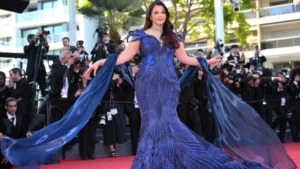
Every year, photos of actors, filmmakers, models, and celebrities walking a glamorous red carpet in the French Riviera dominate headlines around the world. From Hollywood stars and European auteurs to Bollywood celebrities and emerging filmmakers, everyone seems to gather at Cannes.
But despite its global fame, many people still do not know what the Cannes Film Festival actually is, why it was created, who founded it, or why it remains one of the most important events in cinema.
The truth is that Cannes was never intended to be just a celebrity gathering or a fashion showcase. Its origins are deeply connected to politics, artistic freedom, and a fight against censorship. What began as a response to political interference in cinema has evolved into the world’s most prestigious film festival and one of the most influential cultural events on the planet.
What Is the Cannes Film Festival?
The Cannes Film Festival, officially known as the Festival de Cannes, is an annual international film festival held in the Mediterranean resort city of Cannes in France.
The festival brings together filmmakers, actors, producers, distributors, critics, journalists, and industry professionals from across the world. It serves as a platform for premiering new films, discovering emerging talent, celebrating cinematic achievements, and facilitating major business deals within the global film industry.
Today, Cannes is widely regarded as one of the most prestigious film festivals in the world, often mentioned alongside the Venice Film Festival and the Berlin International Film Festival as part of the elite group of international film festivals.
The Surprising Origin Story Behind Cannes
Most people assume Cannes was created simply to celebrate movies.
In reality, its origins are much more political.
The story begins in 1938 at the Venice Film Festival, which at the time was the world’s most prominent international film festival. That year, the awards process was directly shaped by the political interests of fascist Italy and Nazi Germany. Leni Riefenstahl, the filmmaker behind Nazi propaganda productions, won the top prize for Best Foreign Film with her documentary Olympia. The prize for Best Italian Film went to a film co-written by Mussolini’s own son. These decisions were not coincidences. The jury’s preferred outcomes had been overruled under political pressure, and when the results were announced, the French, British, and American jury members walked out in protest, vowing not to return.
Among those who witnessed this and were deeply disturbed by it was Philippe Erlanger. He was a French diplomat, historian, writer, and art critic who served as director of the Association française d’action artistique, the body responsible for France’s international artistic exchanges. On his train journey back from Venice to Paris, he began formulating the idea of a rival festival, one free from political pressure, ideological interference, and government manipulation of art.
That idea would eventually become the Cannes Film Festival.
Who Founded the Cannes Film Festival?
Three figures were central to bringing Cannes into existence.
- Philippe Erlanger conceived the original idea on that journey back from Venice. He pushed for the creation of a genuinely independent international film festival rooted in artistic freedom rather than political convenience.
- Jean Zay, France’s Minister of National Education and Fine Arts, was the government figure who gave Erlanger’s vision official backing and transformed it from a private proposal into a national project. Zay was, at that point, the youngest minister ever to hold the position in France. He had also been present at the Venice scandal and was immediately sympathetic to Erlanger’s thinking.
- Robert Favre Le Bret, a film journalist and administrator, was the third key figure in the founding process and later became one of the most important long-serving executives in the festival’s history. He is often overlooked in casual accounts of Cannes, but his contribution to the festival’s actual establishment was significant.
Together, their shared vision was straightforward but ambitious: build a festival that put artistic merit above everything else, where no government could dictate which films won.
Why Was Cannes Chosen as the Host City?
The choice of Cannes was not inevitable.
Several French cities were considered, including Biarritz and Vichy, before Cannes was selected on May 31, 1939. The city secured the festival through a combination of factors: strong financial commitments from the local municipality, including an offer to construct a dedicated venue, the availability of existing luxury hotel infrastructure, and a climate and setting on the French Riviera that made it naturally attractive for an international gathering.
Today, Cannes is almost synonymous with cinema itself, but that reputation largely grew because of the festival rather than the other way around.
The Festival That Never Happened
One of the most fascinating chapters in Cannes history is that its first edition was effectively stopped before it could truly begin.
The inaugural Cannes Film Festival was planned to run from September 1 to September 20, 1939. Invitations had gone out, films had been selected, and an impressive roster of international guests had arrived. Among the American selections was The Wizard of Oz. Hollywood stars,s including Gary Cooper, Marlene Dietrich, and James Cagn, ey had come to Cannes. Louis Lumière, the pioneer of cinema himself, had been appointed as the festival’s honorary president.
On the evening of August 31, a single private screening took place: the American film The Hunchback of Notre Dame. It was the only film shown. The following morning, September 1, Germany invaded Poland. Europe moved toward war within hours. France ordered general mobilisation, and the festival was abandoned almost immediately.
It would take seven years before the dream of Cannes could finally become a reality. Jean Zay, one of its founding figures, did not live to see it. He was removed from prison in 1944 by agents of the collaborationist Vichy government, driven to a wooded area, shot, and buried under rocks. His body was not discovered until 1946.
The First Real Cannes Festival
Following the end of World War II, Philippe Erlanger was contacted by the restored French government and invited to revive the project he had started in 1939.
The first successful Cannes Film Festival took place from September 20 to October 5, 1946, held at the former Casino of Cannes. Twenty-one nations presented their films at the inaugural edition, making it one of the most ambitious international cultural events of the post-war era.
The atmosphere was celebratory and chaotic in equal measure. The Palais des Festivals was still incomplete. Technical problems surfaced throughout. But the spirit of the event was exactly what Erlanger and Zay had envisioned: a gathering of nations around cinema, free from ideological interference, in the years immediately following the worst conflict in human history.
The films screened at that first edition included Billy Wilder’s The Lost Weekend, Roberto Rossellini’s Rome, Open City, David Lean’s Brief Encounter, and Jean Cocteau’s Beauty and the Beast. Rather than a strict competitive format, the 1946 edition placed more emphasis on cultural exchange than on ranking films against each other.
What began as a cultural experiment after extraordinary circumstances soon became a defining institution in global cinema.
How Cannes Became the World’s Most Prestigious Film Festival
The rise of Cannes did not happen overnight.
The festival’s early years were genuinely difficult. The 1948 and 1950 editions were cancelled outright due to financial problems. It was not until 1949 that a dedicated venue, the Palais des Festivals, was built on the seafront promenade of La Croisette, though even its inaugural roof blew off in a storm before the building was complete.
In 1951, the festival moved from autumn to its current spring slot specifically to avoid competing directly with the Venice Film Festival.
Throughout the 1950s, 1960s, and 1970s, the festival steadily expanded its international influence. Major filmmakers sought recognition there, distributors looked for promising films, and journalists increasingly treated Cannes as a global cultural event rather than a regional one.
The festival also evolved beyond screenings. As the industry grew, Cannes became a marketplace where producers could secure funding, distributors could acquire films, and studios could launch international campaigns. The event gradually transformed into both an artistic celebration and a major commercial hub.
Today, films that premiere at Cannes often go on to receive major awards and worldwide recognition.
What Happens at Cannes Today?
To casual observers, Cannes may appear to be a glamorous red-carpet event.
In reality, the red carpet represents only a small part of what happens during the festival’s roughly two weeks each May.
Modern Cannes includes world premieres of major films, international competition screenings, press conferences, industry networking, film financing meetings, distribution negotiations, market screenings, jury deliberations, and award ceremonies. Thousands of film professionals attend each year to conduct business, discover new talent, and showcase their work to a global audience.
For many independent filmmakers, a Cannes selection can change the trajectory of an entire career.
The Importance of the Palme d’Or
The highest honor awarded at Cannes is the Palme d’Or, widely considered one of the most prestigious prizes in world cinema.
It is worth knowing that the award was not always called the Palme d’Or. At the 1946 inaugural edition, the top prize was called the Grand Prix du Festival International du Film. The Palme d’Or name as the festival’s primary award came into consistent use later, and the name and format of the top prize changed several times in Cannes history before settling into its current form.
Winning the Palme d’Or can dramatically increase a film’s visibility, attract distributors, boost box-office prospects, and elevate a filmmaker’s international reputation. Many films that have won it have become classics of world cinema. Because of its prestige, filmmakers often consider it one of the highest achievements of their careers.
India’s Connection to Cannes
India has a long and significant relationship with Cannes, and it begins right at the very start.
At the inaugural 1946 edition, the Indian film Neecha Nagar, directed by Chetan Anand in his feature directorial debut, shared the festival’s top prize, then called the Grand Prix du Festival International du Film, with films from ten other countries, including Roberto Rossellini’s Rome, Open City and Billy Wilder’s The Lost Weekend. Neecha Nagar remains the only Indian film to have ever won Cannes’ highest honor. It was also the first film for which sitar maestro Pandit Ravi Shankar composed music.
The achievement is particularly remarkable given that India had not yet gained independence at the time. That came in 1947. And in a detail that says something about the cultural politics of the era, Neecha Nagar was never officially released in India despite winning one of world cinema’s most prestigious prizes.
Over the decades, Indian filmmakers, actors, producers, and artists have continued to participate in the festival. Satyajit Ray had four films screened at Cannes. In recent years, Indian representation has expanded across competition screenings, jury positions, market activities, and cultural showcases.
The presence of Indian celebrities on the Cannes red carpet has also contributed to the festival’s popularity among Indian audiences, though that visibility is only the most visible layer of a relationship that runs much deeper.
Why So Many Celebrities Attend Cannes
One of the biggest misconceptions about Cannes is that only competing filmmakers attend.
In reality, many celebrities attend even when they have no film in competition, and their reasons for being there have nothing to do with the awards.
For actors and filmmakers, Cannes provides unmatched global media exposure. A single appearance can generate worldwide coverage across entertainment, fashion, and news media simultaneously. Brand partnerships, luxury fashion events, and international publicity campaigns run parallel to the film screenings throughout the festival. For studios, it is an opportunity to announce projects, secure deals, and build international profiles for their talent.
This is why the festival attracts everyone from Oscar winners and blockbuster stars to emerging actors, directors seeking distribution, and industry figures whose names most audiences would not recognise but who are often the most important people in the building.
Why Cannes Still Matters Today
In an era of streaming platforms, social media, and digital distribution, some people question whether film festivals remain relevant.
Cannes provides the answer every year.
The festival continues to serve as a genuine global meeting point for cinema. It helps independent filmmakers find audiences that would otherwise never discover their work. It enables international film sales that determine which stories reach which parts of the world. It promotes artistic expression in an industry that is increasingly driven by franchise economics. And it highlights films and filmmakers that might otherwise struggle to reach any audience at all.
Its influence extends far beyond the red carpet.
For filmmakers, Cannes can launch careers. For distributors, it can uncover future successes before anyone else knows they exist. For audiences, it introduces groundbreaking films from every corner of the world. And for cinema itself, it remains one of the most consequential stages available, in a way that no streaming platform or social media algorithm has yet managed to replicate.
Final Thoughts
The Cannes Film Festival is far more than a celebrity gathering or a fashion spectacle.
It was born from a specific moment of moral outrage: the sight of fascist governments handing film prizes to their own propaganda while an international jury sat powerless to stop it. The French, British, and American delegates who walked out of Venice in 1938 did not know they were setting in motion the events that would create the world’s most important film festival. Philippe Erlanger, thinking through his response on a train journey back to Paris, could not have fully imagined what that response would eventually become.
Created by Erlanger alongside Jean Zay and Robert Favre Le Bret, interrupted by a world war that killed one of its own founders, and revived in a devastated post-war France through a public subscription because the government could not afford it, Cannes earned its place at the center of world cinema the hard way.
Nearly eight decades later, it continues to shape careers, influence the industry, and bring the world’s attention to the power of storytelling through film. That is not a small thing to have come from one man’s indignation on a train from Venice.