

Pohela Baisakh, also known as Poila Baisakh, marks the beginning of the Bengali New Year and is one of the most culturally significant festivals for Bengali communities across India and Bangladesh. Celebrated on April 15 in 2026, the day is more than a calendar reset. It is a moment of renewal, identity, and shared cultural expression.
Across West Bengal, Tripura, Assam, and Bangladesh, the festival brings together tradition and modern life in a way few celebrations do. Streets fill with music, homes open to guests, and people step into the new year with a conscious effort to leave behind the past.
What Is Pohela Baisakh and When Is It Celebrated?
Pohela Baisakh literally means the first day of the month of Boishakh in the Bengali calendar. It follows a solar system, which is why the date typically falls on April 14 or 15 each year.
In 2026, it is observed on April 15 in India. The day also marks the beginning of the Bengali year 1433, according to the traditional Bangabda calendar.
Unlike purely religious festivals, Pohela Baisakh is widely considered a secular celebration. It is observed by Bengalis across different religions as a shared cultural occasion centered on new beginnings and community.
Historical Origins: From Tax Reform to Cultural Identity
The roots of Pohela Baisakh are commonly traced back to the reign of Akbar in the 16th century. At the time, the Islamic Hijri calendar did not align with agricultural cycles, which created problems for tax collection.
To solve this, a revised calendar combining solar and lunar elements was introduced to match harvest seasons. This allowed farmers to pay taxes in a more practical cycle.
Over time, what began as an administrative reform evolved into a cultural tradition. The first day of the new year became associated with clearing debts and starting fresh, which eventually turned into the broader celebration we see today.
Why Pohela Baisakh Still Holds Deep Significance?
Even today, the meaning of Pohela Baisakh goes beyond celebration. It represents a reset, both emotionally and financially.
For individuals, it is a day to begin again with clarity and intention. For businesses, it marks the start of a new financial cycle. For communities, it reinforces shared identity and continuity. In Bangladesh, the day is a national holiday and a key part of cultural identity. In India, especially in West Bengal, it remains deeply tied to tradition while adapting to modern lifestyles.
How the Festival Is Celebrated
The way Pohela Baisakh is celebrated reflects both heritage and everyday life.
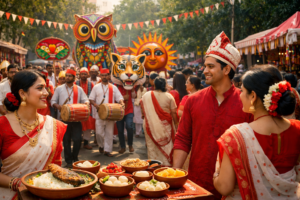
One of the most visually striking traditions is the Mangal Shobhajatra, a large cultural procession featuring masks, folk art, and music. Recognised by UNESCO as an Intangible Cultural Heritage, it symbolises unity and resistance against social divisions.
In many places, the day begins early with songs, especially compositions by Rabindranath Tagore, which are closely associated with Bengali identity.
Clothing also carries meaning. People wear new outfits, often in red and white, symbolising purity and prosperity. Families visit relatives, exchange greetings like “Shubho Noboborsho,” and share meals.
Food plays a central role. Dishes like panta bhaat with hilsa fish, along with sweets such as rosogolla and sandesh, are widely enjoyed. Local fairs, known as Boishakhi melas, bring together crafts, food, and performances, creating a festive atmosphere across generations.
The Business Tradition of Haal Khata
One of the most distinctive aspects of Pohela Baisakh is the tradition of Haal Khata.
On this day, traders and shopkeepers close old account books and open new ones. Customers are often invited to shops, offered sweets, and encouraged to settle past due. It is both a symbolic and practical reset of financial relationships.
Even in an era of digital payments, this tradition continues in many parts of Bengal, sometimes adapted into modern formats but retaining its original intent.
Key Traditions at a Glance
| Tradition | What It Means | Why It Matters Today |
|---|---|---|
| New Clothes | Wearing fresh outfits | Symbol of a clean start |
| Haal Khata | Opening new account books | Financial reset and trust-building |
| Mangal Shobhajatra | Cultural procession | Expression of unity and heritage |
| Traditional Foods | Seasonal meals and sweets | Cultural continuity |
| Family Visits | Meeting relatives and elders | Strengthening social bonds |
What Makes Pohela Baisakh Unique Today
What sets Pohela Baisakh apart from many other festivals is its balance between tradition and adaptability.
It is not confined to rituals or religion. Instead, it evolves with time. Today, celebrations include cultural events, online greetings, themed restaurant menus, and community gatherings even outside Bengal.
At the same time, its core values remain unchanged. Renewal, togetherness, and identity continue to define the festival.
In a fast-moving world, Pohela Baisakh offers something rare: a deliberate pause to reset, reconnect, and begin again.
Conclusion
Pohela Baisakh is not just the start of a new year on the Bengali calendar. It is a reflection of history, culture, and shared belonging.
From its origins in agricultural reform to its present-day celebrations, the festival continues to carry meaning across generations. Whether observed through traditional rituals, family gatherings, or modern adaptations, it remains a powerful reminder that every new year brings an opportunity to start fresh.
FAQs
1. Why does Pohela Baisakh fall on different dates in India and Bangladesh?
The difference comes from calendar adjustments. Bangladesh follows a fixed date of April 14, while in India, it can fall on April 14 or 15 based on solar calculations.
2. Is Pohela Baisakh a religious festival?
No, it is primarily a cultural and secular festival celebrated by Bengalis of all religions.
3. What is the significance of Haal Khata?
Haal Khata marks the closing of old financial records and the beginning of new ones, symbolising a fresh financial start.
4. What are the most traditional foods eaten on this day?
Common dishes include panta bhaat with hilsa fish, along with sweets like rosogolla, sandesh, and payesh.
5. Why is Pohela Baisakh still relevant today?
It continues to represent renewal, cultural identity, and community bonding, making it meaningful even in modern urban life.